
Dental Implants in Jonesboro: What Makes Someone a Good Candidate?
August 18, 2026 9:00 amMissing a tooth can change more than the way your smile looks. You may start chewing more on the other side, notice food collecting around the open space, or simply get tired of working around the gap. So, if you are considering a dental implant, one of the first things Dr. Dennis Dickson will look at is whether your mouth has the support an implant needs to heal well and stay stable.
At Dickson Family Dental in Jonesboro, AR, implant planning starts with the missing-tooth area, but it does not stop there. Dr. Dickson also looks at your gums, the amount of jawbone available, your medical history, and the condition of the teeth around the space. Then, if something needs attention first, that can be handled before the implant is placed.
What Is a Dental Implant?
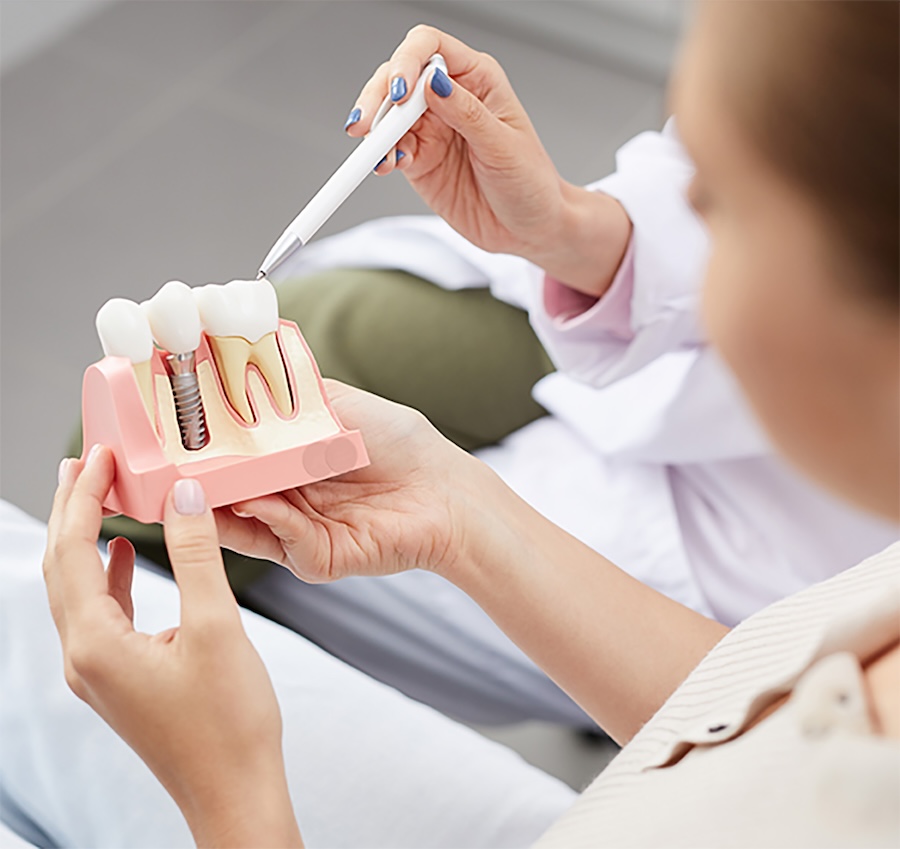
A dental implant replaces the root portion of a missing tooth. The implant itself is a small post placed into the jawbone, where it heals and becomes stable enough to support a replacement tooth. After that healing period, an abutment connects the implant to the restoration above the gums.
For a single missing tooth, that restoration is usually a crown. However, implants can also support bridges or certain types of dentures when several teeth are missing. So, the implant acts as the foundation underneath while the visible restoration does the chewing above it.
Because an implant depends on the jawbone for support, planning begins below the gumline. Dr. Dickson needs to know how much bone is there, how healthy it is, and whether the surrounding tissue is ready for treatment. That is why an implant evaluation involves more than measuring the empty space between two teeth.
Healthy Gums Before Implant Placement
The gums around an implant need to stay healthy, just as they do around natural teeth. If active gum disease is present, inflammation and bacteria around the area can interfere with healing and make long-term care more difficult. So, Dr. Dickson will check for bleeding, swelling, periodontal pockets, and tartar around the nearby teeth.
If the gums need treatment first, that does not automatically rule out an implant. Instead, you may need a professional cleaning, periodontal treatment, or some time to get the inflammation under better control. Then, once the tissue is healthier, implant placement can be reconsidered.
This is especially important if your gums bleed often when you brush or floss. Bleeding may seem minor, but repeated inflammation around the area is something Dr. Dickson will want to address before surgery. Starting with healthier gums gives the implant a better environment while the bone is healing around it.
Jawbone Support for Dental Implants
When a natural tooth is present, chewing pressure travels through the root and helps stimulate the surrounding jawbone. After the tooth is removed, that stimulation is gone, so the bone in the area can gradually shrink. Because of that, someone who lost a tooth recently may have more bone available than someone who has had the space open for several years.
The amount of bone loss varies from person to person, though. So, Dr. Dickson will use imaging to see how much height and width are actually available in the area. Then, he can tell whether there is enough bone to place an implant safely.
If the ridge is too narrow or too shallow, a bone graft may be recommended first. The graft adds volume where the implant will eventually need support. After the graft heals, Dr. Dickson can reevaluate the area and decide when implant placement can move forward.
Bone Grafting Before Dental Implants
Finding out that some bone has been lost does not necessarily mean an implant is no longer possible. Bone grafting is commonly used when an area needs more support before implant placement. So, the issue may be more about timing than whether treatment can happen at all.
Sometimes grafting is done at the same time a damaged tooth is removed. In other cases, the tooth has already been missing for a while, so grafting is completed as a separate procedure. Then, after the graft has healed enough, the implant can be planned around the rebuilt area.
How much healing time is needed depends on the size of the graft and the location of the tooth. Because of that, Dr. Dickson will explain whether the graft can be combined with another procedure or whether it needs its own healing period. That gives you a clearer idea of the full timeline before treatment begins.
Health Conditions and Dental Implants
Implant placement is a surgical procedure, so Dr. Dickson will also review your general health. Certain medical conditions can affect healing, infection risk, or how the bone responds after the implant is placed. So, your health history is part of the implant evaluation from the beginning.
For example, diabetes does not automatically prevent someone from receiving a dental implant. However, blood sugar control can affect healing, so Dr. Dickson will want to know how the condition is being managed. The same goes for other conditions that affect the immune system, bone health, or recovery after surgery.
Bring an updated medication list to the evaluation as well. Some medications can affect bleeding, bone metabolism, or healing, and Dr. Dickson needs that information before treatment is scheduled. If another physician needs to be consulted, that can happen before implant surgery rather than after plans are already in motion.
Smoking, Vaping, and Implant Healing
Smoking can interfere with blood flow and healing around an implant. It can also increase the risk of problems with the gums and bone that support the implant later. So, if you smoke, Dr. Dickson needs to know before treatment begins.
Vaping and other nicotine products should be mentioned too. Even if you do not smoke traditional cigarettes, nicotine can still affect the tissues involved in healing. Because of that, be open about what you use and how often.
This is not about turning the appointment into a lecture. Dr. Dickson needs the information because it can affect the timing, healing, and long-term outlook of the implant. Then, if nicotine use changes the recommendation, he can explain exactly how.
Checking the Teeth Around the Missing Tooth
An implant may replace one missing tooth, but the teeth beside it still affect the plan. Cavities, broken fillings, gum disease, or other problems nearby may need treatment before implant placement. So, Dr. Dickson will look at the whole area rather than focusing only on the gap.
The bite is important as well. Once the implant crown is finished, it needs to meet the opposing teeth comfortably and share chewing pressure with the rest of the bite. If one spot takes too much pressure, that may affect how the crown is shaped or positioned.
Sometimes the neighboring teeth are completely healthy, which can make an implant especially appealing because those teeth do not need to be altered. However, if the nearby teeth already need crowns or other work, Dr. Dickson may also discuss whether a bridge could be another option. That way, the replacement choice fits what is already happening around the space.
How Dental Implants Heal
After an implant is placed into the jawbone, the surrounding bone needs time to heal closely around it. This process is called osseointegration, and it is what gives the implant its stable foundation. So, even though the implant is physically in place after surgery, the bone still has work to do before the final tooth is added.
That healing usually takes time rather than days. Depending on the location, bone quality, grafting, and other factors, Dr. Dickson may allow several months before the implant receives its final crown. During that period, the bone is gradually becoming more integrated with the implant.
Because of that, implant treatment usually takes longer than placing a traditional bridge. However, the healing period is built into the process so the implant has a strong base before it starts handling regular chewing. Dr. Dickson will explain the expected timing based on your specific site.
Cleaning Around Dental Implants
An implant cannot develop a cavity, but the gums and bone around it can still become inflamed if plaque collects there. So, daily brushing and cleaning around the implant remain important after treatment. The surrounding tissues still need regular care even though the implant itself is not a natural tooth.
If your brushing and flossing routine has been inconsistent, Dr. Dickson may talk with you about improving it before surgery. That gives the gums a healthier start and gives you time to get comfortable with the cleaning routine you will need later. Then, once the implant crown is in place, the same habits can continue around the restoration.
Depending on the type of restoration, floss, interdental brushes, or another cleaning tool may work best. Dr. Dickson or our team can show you how to clean the area without making it complicated. A routine that fits easily into what you already do each day is usually easier to keep going.
Grinding and Clenching With Dental Implants
If you grind or clench your teeth, let Dr. Dickson know. Strong repeated pressure can affect natural teeth, crowns, and implant restorations, especially when it happens every night. Because of that, grinding may need to be considered when the implant crown and bite are planned.
You may already know you grind because you wear a nightguard or wake up with a tired jaw. However, some people do not realize it until worn teeth, chipped restorations, or other signs show up during an exam. So, Dr. Dickson may spot evidence of clenching even if you have never noticed it yourself.
A nightguard may be recommended if grinding is a concern. That can help reduce some of the pressure placed on the implant restoration while you sleep. Then, the implant is not taking repeated heavy force night after night without any protection.
Age and Dental Implant Candidacy
Adults of many ages can be considered for dental implants. Dr. Dickson is generally more concerned with health, healing ability, bone support, and the condition of the gums than with the number on your birthday. So, being older does not automatically mean implant treatment is off the table.
For younger patients, however, jaw growth needs to be complete before implant placement. An implant does not move with a developing jaw the same way natural teeth do. Because of that, placing one too early can create problems as the surrounding teeth and bone continue changing.
For older adults, the evaluation focuses more on overall health, medications, bone levels, and how easily the area can be maintained at home. If those pieces look good, age alone may not prevent treatment. Dr. Dickson will base the recommendation on what he sees in your mouth and health history.
How Long the Tooth Has Been Missing
If a tooth was removed recently, there may still be a good amount of bone where the root used to be. However, as months and years pass, that ridge can gradually lose width and height. So, an older missing-tooth space may need a little more planning than a recent one.
If the tooth has been gone for several years, Dr. Dickson may find that the area needs grafting before it can support an implant. Nearby teeth may also have shifted toward the gap during that time. Then, there may be less room for the final implant crown than there used to be.
Imaging and measurements help show both problems before treatment starts. Dr. Dickson can see whether there is enough bone and enough space for the replacement tooth. If either one is limited, that can be addressed in the treatment plan first.
Dental Implants After an Extraction
If a tooth is still present but needs to be removed, implant planning can sometimes begin before the extraction. Dr. Dickson can evaluate the root, bone, infection, and surrounding tissue while the tooth is still there. Then, he can plan what the site may need as soon as the tooth is removed.
In some cases, bone graft material can be placed in the socket at the time of extraction to help preserve the ridge. Depending on the bone and the condition of the site, an implant may occasionally be placed during the same appointment. However, other areas heal better when the extraction site is allowed to recover first.
So, if you already know a tooth may need to come out, it helps to discuss replacement before the extraction whenever possible. That gives Dr. Dickson a chance to think ahead about the future implant site. It can also help you understand whether grafting or another step is likely.
Dental Implants and Active Infection
An infected tooth does not automatically mean you cannot eventually have an implant in that location. However, the infection needs to be evaluated and managed so the area can heal well. Because of that, implant placement may need to wait until the surrounding tissue and bone are in better condition.
Sometimes the tooth is removed and the site is cleaned before anything else is placed. Then, depending on the amount of infection and the condition of the bone, Dr. Dickson may recommend grafting and a period of healing. After that, the site can be checked again for implant placement.
Other cases may allow a different sequence. So, rather than forcing every patient into the same timeline, Dr. Dickson bases the timing on what the socket and surrounding bone actually look like. That can mean fewer surprises once surgery begins.
Replacing Several Missing Teeth With Implants
Dental implants are not limited to replacing one tooth at a time. If several teeth are missing, implants may sometimes support a bridge so that an implant is not needed for every individual tooth. That can replace several teeth while using fewer implant posts.
For patients missing most or all of their teeth, implants may also be used to help stabilize a denture. The denture can attach to the implants rather than relying only on the gums for support. As a result, movement during eating may be reduced.
So, if you have several missing teeth, Dr. Dickson will look at the whole arch rather than treating each space like a separate problem. The number and location of implants depend on your bone, bite, remaining teeth, and the type of restoration being considered. Then, the plan can be built around how the entire mouth needs to function.
Using Implants to Support Dentures
A traditional denture rests on the gums, so some movement can happen, especially with a lower denture. As the jaw changes over time, a denture that once fit fairly well may begin to rock, lift, or need more adhesive. That can make certain meals more frustrating than they used to be.
Implants can sometimes provide added support for a denture. The denture can attach to the implants instead of depending entirely on the gums for stability. Then, the appliance may feel more secure while chewing and speaking.
However, not every loose denture needs implants. Sometimes a reline, adjustment, or new denture is the better solution. Still, if you keep adding more adhesive or avoiding foods because the denture moves, bring that up with Dr. Dickson during the evaluation.
Making Sure There Is Enough Room for the Implant Crown
Implant planning is not only about whether the post fits in the bone. There also needs to be enough room above the implant for a crown that fits comfortably between the neighboring teeth. So, Dr. Dickson measures both the bone underneath and the space available above it.
If a tooth has been missing for years, nearby teeth may have drifted into the opening. The opposing tooth can also move because it no longer has a tooth to meet when you bite. Then, even if the bone is suitable, the available space for the final crown may be smaller than expected.
Dr. Dickson checks those details before implant placement. If more room is needed, that can be discussed before surgery rather than when it is time to make the crown. Planning the space early helps avoid getting all the way to the final restoration and finding that things are tighter than they looked.
What Happens During a Dental Implant Evaluation?
Dr. Dickson begins by examining the missing-tooth area along with the surrounding teeth and gums. He will also review your health history, medications, smoking or nicotine use, and any previous problems in that part of your mouth. Then, he can start matching the implant plan to both your dental and medical history.
Imaging is used to look at the jawbone beneath the gums. That allows Dr. Dickson to evaluate the height and width of the bone and see nearby structures that need to be considered when positioning an implant. It also helps show whether bone loss or other changes have occurred since the tooth was removed.
After that, Dr. Dickson can explain whether the site looks ready for implant placement or whether another step should happen first. If bone grafting, periodontal treatment, an extraction, or another procedure is recommended, he can explain where it fits in the sequence. So, you leave the evaluation knowing what needs to happen first rather than hearing only, “Yes, you can get an implant.”
What If You Need Treatment Before an Implant?
Sometimes an implant evaluation ends with a yes, but with another step first. That may mean treating gum disease, rebuilding bone, removing a damaged tooth, or handling another dental problem before implant placement. In many cases, those steps are what make implant treatment possible later.
For example, if the bone is too narrow, grafting may rebuild the area enough to support an implant. If the gums are inflamed, periodontal treatment may need to happen before surgery. Then, once the tissues have healed, Dr. Dickson can take another look at the site.
In other situations, an implant may not be the best option after all. If that happens, Dr. Dickson can discuss a bridge, partial denture, or another way to replace the missing tooth. The goal is to find a replacement that fits the condition of your mouth rather than forcing an implant into an area that is not suited for one.
How Long Dental Implant Treatment Takes
Dental implants usually involve several stages rather than one appointment. There may be an extraction or bone graft first, followed by healing, implant placement, another healing period, and then the final crown. So, it helps to understand the sequence before you start.
If you have travel, work obligations, or other dental treatment coming up, mention that during planning. Dr. Dickson can explain which appointments need to stay on schedule and where there may be some flexibility. Then, you can see how treatment fits into the months ahead.
Most patients are not simply left with an obvious open space throughout the entire process, especially when a front tooth is involved. Depending on the location and treatment, temporary options may be available while healing takes place. Dr. Dickson can explain what is possible for your specific situation.
Dental Implants at Dickson Family Dental in Jonesboro, AR
If you are missing a tooth and wondering whether a dental implant could work for you, Dr. Dennis Dickson can start by checking the bone, gums, bite, and neighboring teeth. Some patients are ready for implant placement with very little preparation, while others may need a bone graft, periodontal treatment, or another step first. Then, once Dr. Dickson sees what the area looks like, he can explain the process from the first procedure through the final restoration.
If you have been chewing around a missing tooth, dealing with a loose denture, or thinking about replacing a tooth that has been gone for years, call Dickson Family Dental in Jonesboro, AR. We can take a close look at the area, answer your questions, and explain what needs to happen before implant placement. Schedule an implant evaluation with Dr. Dickson, and we’ll help you find out whether dental implants are a good fit for you!
Categorised in: Dental Implants