
Dental Crowns & Bridges in Jonesboro: Repairing Damage and Replacing Missing Teeth
July 17, 2026 9:00 amMaybe a tooth cracked while you were eating something that did not seem nearly hard enough to cause trouble. Maybe an old filling finally gave up after years of service. Or perhaps a tooth is already missing, and you are tired of chewing around the gap.
That is usually when crowns and bridges enter the conversation. A crown repairs a tooth that is still present. A bridge replaces a tooth that is gone by using the teeth beside the space for support.
The harder decision is figuring out whether a damaged tooth can still be rebuilt or whether the missing area needs to be restored. At Dickson Family Dental in Jonesboro, AR, Dr. Dennis Dickson looks at the tooth, root, gums, bite, neighboring teeth, and available bone before recommending treatment.
What a Dental Crown Does
A crown covers the visible portion of a tooth above the gumline. It restores the tooth’s shape and chewing surface while protecting the weaker structure underneath. Crowns are often used when a filling would leave the tooth too vulnerable.
The tooth is shaped so the crown can fit over it securely. Dr. Dickson removes decay, damaged filling material, and fragile sections before rebuilding the foundation. A scan or impression is then used to create the restoration.
Once placed, the crown becomes the new outer surface of the tooth. The natural root remains in the jaw, and the tooth can continue doing its job. Ideally, it should feel so ordinary that you stop thinking about it.
When a Tooth May Need a Crown
A large cavity can leave the remaining walls of a tooth thin and brittle. Another filling may replace the missing area, but it may not protect those walls from chewing pressure. A crown wraps around the weakened structure and helps hold it together.
Crowns may also repair broken cusps, cracks, or teeth with heavy wear. A tooth that has been filled several times can slowly reach the point where one more patch is not the best plan.
A crown is also commonly recommended after root canal therapy, especially on a back tooth. These teeth often started with deep decay, a fracture, or a large filling. Covering the chewing surface helps reduce the chance of the tooth splitting later.
A Crown Cannot Save Every Damaged Tooth
A crown needs a stable foundation beneath it. The root must be healthy enough, the surrounding bone must provide support, and enough tooth structure must remain to hold the restoration.
Some badly broken teeth can still be rebuilt. Crown lengthening may expose more tooth above the gumline, or a buildup may replace missing structure beneath the future crown. These steps make more sense when the root is strong and the finished tooth has a reasonable chance of lasting.
A vertical fracture through the root creates a different problem. Bacteria can continue entering through the crack, even if the visible part of the tooth is covered. Extraction may be recommended when the root cannot be sealed or supported predictably.
What a Dental Bridge Does
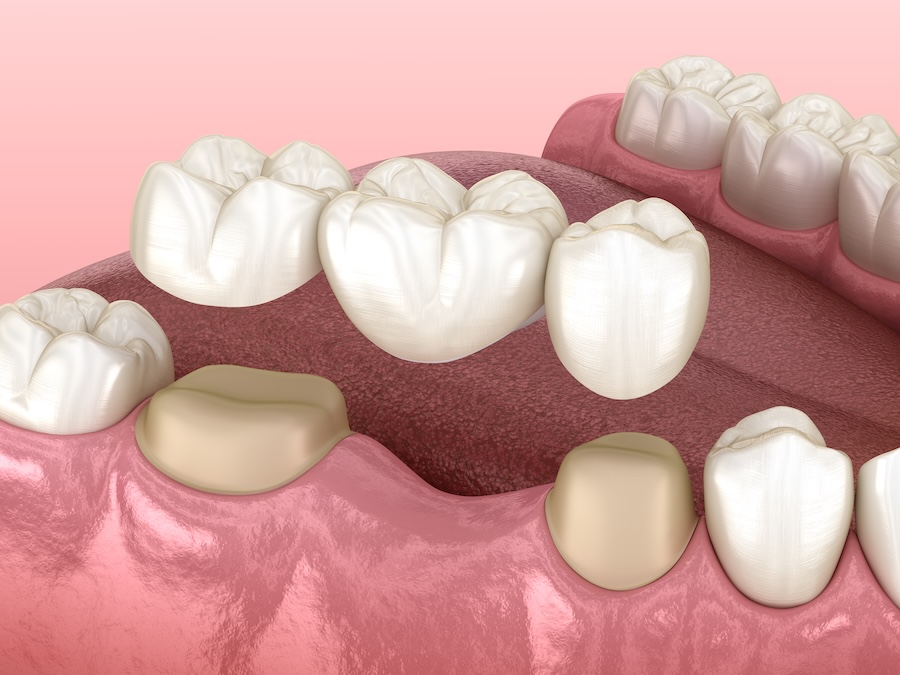
A traditional dental bridge replaces a missing tooth with an artificial tooth called a pontic. Crowns are placed on the teeth beside the gap, and the replacement tooth is connected between them. The finished bridge stays in the mouth rather than coming out each night.
A bridge restores a chewing surface and fills the open space in the smile. It can also help keep nearby teeth from leaning into the gap over time.
Bridges can replace one tooth or, in selected cases, more than one. Longer bridges ask more of the supporting teeth, so Dr. Dickson will check their strength, root support, and gum health carefully.
The Teeth Beside the Gap Need to Be Strong
The teeth supporting a bridge are called abutment teeth. They carry the replacement tooth between them, so they need healthy roots and enough surrounding bone to handle the extra work.
A tooth that already needs a crown may make a practical bridge support. For example, if a missing tooth sits beside a heavily filled tooth that needs coverage anyway, a bridge may address both problems in one plan.
The decision becomes more complicated when the neighboring teeth are untouched and healthy because a traditional bridge requires shaping them for crowns. Dr. Dickson will explain what that means for the teeth beside the space before treatment begins.
Crowns Repair Teeth; Bridges Replace Them
A crown cannot fill an empty space by itself. It needs an existing tooth or a dental implant beneath it. A bridge includes at least one artificial tooth that spans the gap.
A bridge also includes crowns on the supporting teeth. Those crowns hold the artificial tooth between them, so the entire restoration works as one connected piece.
When a damaged tooth can still support a crown, keeping it may avoid the need to replace it. If the root is split or too little support remains, removing the tooth may leave a space that can later be restored with a bridge.
Signs a Damaged Tooth May Need More Than a Filling
Pain when biting can come from a crack, loose filling, or weakened cusp. The tooth may feel fine with soft foods, then produce a sharp jolt when you bite into something firmer. Teeth have a way of waiting until lunch to make their complaints known.
Sensitivity around an older filling can also point to decay or leakage at the edge. Food may begin catching beside it, or floss may shred against a rough area. The top of the filling may look fine while damage continues underneath.
A crown may be recommended when several surfaces or chewing cusps have weakened. X-rays and the clinical exam help Dr. Dickson estimate how much healthy tooth will remain after the old filling and decay are removed.
Signs a Missing Tooth Is Affecting the Area
A missing tooth may stop hurting once the area heals, but the space can still affect the rest of the mouth. A neighboring tooth may begin leaning into the gap. The tooth above or below it may also drift because it no longer has an opposing tooth to meet.
Food can collect around tilted teeth and become harder to clean. The bite may also begin feeling uneven, especially when the missing tooth once handled a large share of the chewing.
These changes happen slowly for some people and more quickly for others. Replacing the tooth before the space changes significantly often gives the dentist more room to work with.
When a Bridge May Be a Practical Choice
A bridge may work well when the teeth beside the gap are strong enough to support it. It can be especially useful when those teeth already have large fillings or need crowns for their own protection.
Treatment usually takes place over a small number of appointments. The supporting teeth are shaped for crowns, and a scan or impression records the area and the way the upper and lower teeth meet. A temporary bridge may protect the teeth while the final restoration is made.
Once the bridge is finished, it remains fixed in place and does not need to be removed for meals or sleep. It should feel stable during chewing and blend into the bite without hitting too heavily.
What the Final Restoration Should Feel Like
A new crown or bridge may feel slightly unfamiliar at first. The tongue notices tiny changes, often long before the rest of the mouth does. That feeling usually fades as you adjust.
Chewing should feel comfortable once the bite is balanced. A restoration that hits too early can make the tooth sore, while a loose contact can trap food.
Persistent pain, swelling, a loose restoration, or ongoing sensitivity should be reported. Small bite adjustments can often make a noticeable difference.
Cleaning Around a Crown
A crowned tooth can still develop decay where the restoration meets the natural tooth. Brushing should reach the gumline around the entire crown, and floss should pass between the crowned tooth and its neighbors.
Bleeding gums around a crown often point to plaque or irritation. Regular cleaning may help the tissue settle, although an edge that repeatedly traps food should be checked.
A crown protects the damaged part of the tooth, but it does not make the area maintenance-free. The gumline and natural root still need daily attention.
Cleaning Under a Dental Bridge
Regular floss cannot pass straight down between the connected parts of a traditional bridge. A floss threader, small interdental brush, or water flosser can help clean beneath the artificial tooth.
The supporting crowns also need careful cleaning at their edges. Decay in one abutment tooth can affect the entire bridge, which is an unfortunate amount of trouble from one neglected corner.
The dental team can show you which tools fit comfortably beneath the bridge. Once you get used to the motion, it becomes another small part of the evening routine.
How Long Do Crowns and Bridges Last?
Crowns and bridges can last for many years, although they may eventually wear, chip, loosen, or need replacement. Their lifespan depends on the supporting teeth, fit, bite forces, materials, hygiene, and habits such as grinding.
A nightguard may be recommended for someone who clenches or grinds. It helps reduce direct force on the restoration and the teeth supporting it.
Regular exams allow Dr. Dickson to check the margins, bite, gums, and bone. Catching a small problem early is much easier than discovering it after the restoration has become loose or painful.
Dental Crowns and Bridges at Dickson Family Dental in Jonesboro
A crown can protect a cracked, heavily filled, or weakened tooth that still has a solid foundation. A bridge can replace a missing tooth when the neighboring teeth are healthy enough to support it.
At Dickson Family Dental in Jonesboro, AR, Dr. Dennis Dickson can evaluate broken teeth, failing fillings, missing teeth, and changes in the bite. He will explain whether the area needs a crown, a bridge, or another approach based on the condition of the teeth and gums.
Schedule an appointment with Dickson Family Dental when a tooth breaks, chewing becomes painful, a crown feels loose, or a missing tooth is making meals less comfortable. Addressing the problem before more damage or shifting occurs may keep the treatment simpler.
Categorised in: Dental Bridges, Dental Crowns